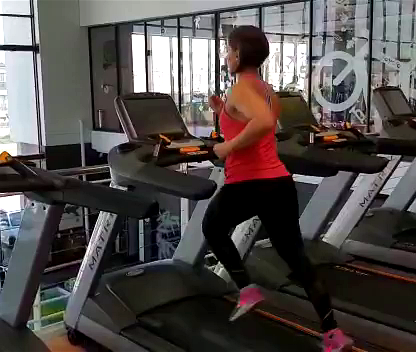
One of the main reasons people — especially beginners — lose motivation or eventually quit is because they don’t see the progress they expect in the first few weeks or months.
Most people start exercising to lose weight, build muscle, or improve their health. Naturally, they expect to see visible results within a short period of time. But what many don’t realize is how the body actually responds to training. Instead, they rely on what they’ve heard — often shaped by marketing — which makes it seem like results should come quickly.
When those results don’t show up as expected, frustration sets in. Motivation drops, and many begin to think, “Maybe this just isn’t for me.”
But what if the progress you’re making isn’t something you can immediately see?
In this article, I’ll explain why, especially in the beginning, it’s more important to focus on how your body is improving in strength and control — not just what you see in the mirror or on the scale.
Why You Might Feel Like You’re Not Progressing
God designed our bodies in a specific way, and we can see this from the moment we are born. When a baby is born, they are fragile and unable to perform even basic movements like walking. They have to go through months of practice to build coordination and control before they can start using their bodies more freely.
Why Strength Improves Before Muscle Growth
If you’ve ever watched a newborn, you’ll notice how they begin by lying on their backs or tummies, kicking, lifting, and simply moving against gravity. These small movements may seem insignificant, but they are essential. This is how the body begins to learn how to move and use its muscles effectively.
So why go all the way back to babies? Because before we can do anything, we must first learn how to do it — and that learning starts in the brain.
When you begin exercising, the same process takes place. Your brain first builds the pathways needed for you to perform movements with coordination and control. As these pathways improve, your body becomes more efficient at using the muscles you already have.
This is why, in the beginning, you often get stronger before you get bigger.
Strength is the first sign that your body is learning.
Only once this coordination and control are established does the body start to shift more toward things like building muscle or burning fat.
And this is where many beginners go wrong. Building good form is how the body is naturally designed to learn. When you start with a focus on proper form and control, your body simply follows what you consistently practice.
On the other hand, starting with poor coordination and bad form can lead to injury, which completely defeats the purpose of getting stronger and healthier. Your body doesn’t know the difference between ‘good reps’ and ‘bad reps’ — it just learns what you repeat.
What You Should Focus On Instead
If you understand that your body first learns before it changes how it looks, you won’t lose motivation when you don’t immediately see your muscles growing or becoming more defined.
Instead, especially in the beginning, focus on how your strength is improving. Notice how exercises start to feel easier over time, or how you can now lift the same weight for more reps than when you first started — for example, going from 8 reps to 10 with the same weight.
These are real signs of progress. They may not be visible in the mirror yet, but they show that your body is adapting, learning, and getting stronger — which is exactly what should happen first.
Faith and Fitness: Growth Takes Time
God similarly works with us in our journey of faith through Jesus Christ. He does not expect us to be perfect from the moment we begin believing. Instead, He first reveals Himself to us through His Word, and then walks with us — teaching us how to honor, obey, and grow in our relationship with Him over time.
In the same way, growth in both faith and fitness is a process. It starts with learning, understanding, and small steps of obedience before it becomes something more visible.
Keep Showing Up
Even if you can’t see every change happening right now, trust that God is at work in both your body and your heart. Every rep done with intention, every workout you show up for, and every small choice toward health becomes part of a bigger transformation.
Don’t give up just because progress feels slow or unseen. Stay faithful, be patient with yourself, and remember: in God’s timing, what He is growing inside of you will eventually become visible on the outside.
Keep going — your progress is real, and your effort matters.
If you’ve ever struggled to stay consistent with exercise, it’s probably because of one of two common mistakes. Either you start off doing as much as possible, believing more will bring better results, only to burn yourself out within a few weeks. Or you start by doing just a little, which isn’t necessarily wrong — but if you stay there too long, you eventually lose motivation because you’re not seeing progress.
The problem with both of these approaches is not a lack of discipline. It’s a misunderstanding of what discipline actually is and how it relates to your goal. And this doesn’t only happen in fitness — it can happen in your faith, your work, or any other area of life.
In this article, I’ll show you how to approach consistency in a way that is both sustainable and practical.
What Consistency Is Not
Before we look at what consistency is, it helps to first understand what it is not.
Consistency is not all-or-nothing. If you go all in from the start, chances are you’ll overdo it and eventually have to slow down significantly — or stop completely. And on the “nothing” side of things, well… nothing gets done.
Consistency is not believing that more is always better. This ties in with the point above. Grinding through pain isn’t always the best option. Not only can it make exercise feel unbearable, but it can also quickly lead to demotivation — or worse, injury.
Consistency is not staying in your comfort zone. You’ve probably heard the saying: nothing changes when everything stays easy. If you stay too comfortable for too long, progress slows down, and that can become discouraging when you’re not moving closer to your goals.
What Consistency Actually Looks Like
Consistency is about doing what you can, as often as possible, to move toward your goal. That starts with defining the goal clearly and then breaking it down into manageable steps you can keep repeating over time.
But what do you do when life happens? Because we all know that even when we make plans, life doesn’t always unfold the way we expect. Proverbs 16:9 says, “In their hearts humans plan their course, but the Lord establishes their steps” (YouVersion Bible App). In other words, we may plan carefully, but God is still sovereign over how our days unfold. So what do you do on the days when you struggle to show up? You do what you can. If that means giving half your usual effort — or even less — it’s still better than quitting completely.
At the same time, there will also be days when rest is the wisest choice. If you are unwell, constantly exhausted, or clearly need recovery, pushing through is not always the right answer. Rest is not the enemy of consistency; sometimes it is part of it. We see the pattern of rest from the very beginning of Scripture: God created in six days and rested on the seventh. Rest days are wise because they allow your body and mind to recover so you can keep showing up over the long term.
How Faith and Fitness Strengthen Each Other
Everyone is already consistent with something in their life — whether they realize it or not. Brushing your teeth, bathing, or making your morning coffee are simple examples of things many people do consistently. Even worry can become a kind of consistency, because if something is troubling you, you may find yourself returning to that thought again and again.
So why bring up these examples? Because if you are already consistent in one area of your life, you can learn to carry that same determination into your health and fitness journey.
The beauty of consistency in both fitness and faith is that they can strengthen each other. If you are already a devoted Christian, chances are you have established consistent practices in your faith — whether that is reading your Bible, praying, or spending regular time with the Lord. Those habits have already given you a blueprint for how to show up consistently in your health and fitness journey.
And the reverse is also true. If you are someone who trains consistently but struggles to show up in your faith with the same devotion, that discipline can still teach you something. The patience, structure, and commitment you build through training can also point you back to the value of showing up faithfully in your walk with Christ.
At the end of the day, it always comes back to this: showing up and doing what you can in the moment.
What Cardio Taught Me About Showing Up
I used to avoid cardio because I simply didn’t like it. Mainly because I was unfit and believed I needed to do long cardio sessions to improve my cardiovascular health. It was so bad that I could never understand why anyone would call a 5 km run a “fun run.” It honestly baffled me!
That was until my previous sports science mentor explained that I only needed 12 minutes, 2 to 3 times a week, of steady-state cardio to improve my cardiovascular health. That small piece of advice was exactly what I needed. At first, I started with 12 minutes of alternating between jogging and walking. I couldn’t even jog continuously for 6 minutes, so my first goal was simply to jog for the first 6 minutes and then alternate between walking and jogging for the last 6.
I aimed to do 2 cardio sessions a week, but there were weeks when I only managed 1. Still, I kept showing up, because I understood that if I wanted to keep improving in strength training (my comfort zone, haha!), I also needed to improve my cardiovascular system.
After building a consistent 12-minute, twice-a-week rhythm, there came a day when I simply felt like continuing beyond the first 12 minutes. I ended up running a full 5 km without having to walk. Did I get very tired during the run? Yes — very much so. But a still, small voice kept telling me, just keep going, even if your speed slows down.
That moment made me realize something important: fitness and faith often overlap in how they teach discipline and consistency.
There will be times in life when you feel strong, and everything seems to flow — much like a training day when you feel your best and perhaps even set a new personal best. Those are gifts of grace, and we should rejoice in them. But there will also be days when you do not know how you are going to make it through. And in those moments, what God asks of us is not perfection, but trust — to rely on Him, to show up, and to do what we can.
Final Encouragement
I hope this article has given you hope and encouragement to either start or continue in your faith and health and fitness journey. At Fitness Disciples, we hope it’s both.
Consistency and discipline walk hand in hand. Bring what you have, no matter how you feel, and keep showing up. On rest days, keep your goal in mind, but remember that you were designed to rest when needed.
In the end, consistency is not about doing everything — it’s about doing what you can, over the long term. Because if you cannot sustain it, it will not last.
If you think regular push-ups are a simple exercise, think again. For a beginner, the first rep can be the most frustrating — no core stability, no pushing strength, and suddenly it feels impossible. That’s usually where people quit… or decide they need weights first. The truth is: you just need the right starting level.
And while a full floor push-up isn’t where most beginners should start, push-ups as a movement are one of the most versatile and beginner-friendly exercises — perfect if you’re not sure where to start or you don’t have a lot of time to train.
In this post, I’ll show you why push-ups work so well — and how to start from a version that fits you.
What are the benefits of push-ups?
Push-ups are a compound movement — multiple joints and muscles working together in one simple exercise. That’s what makes them so effective (and why they can feel hard at first). The best part? They’re versatile, convenient, and easy to scale to your level. Let’s look at the benefits, starting with convenience, then body and fitness.
Convenience benefits
No gym needed: Push-ups are bodyweight-based, so you can do them at home, while traveling — basically anywhere you have a flat surface.
Minimal space: You don’t need a big workout area. If you can lie down comfortably, you’ve got enough space (yes, even next to your bed).
Time-efficient: A set or two takes only a few minutes, which makes push-ups easy to fit into a busy day.
Easy to scale: You can start where you are and build up (wall → incline → knee → floor). Once you know your starting level, progression is simple.
Easy to track: Progress is clear: more clean reps, more sets, better control — and then you move up to the next level over time.
Body/fitness benefits
Full-body strength: Push-ups strengthen your upper body, core, and even your glutes, because your whole body works together to move as one unit.
Upper-body pushing strength: They build pressing strength in your chest, shoulders, and triceps.
Core stability + bracing: A good push-up demands a strong, steady body line — which means your core learns to stay engaged and stable.
Shoulder stability: Done with good form (and from the right starting level), push-ups can build strong, stable shoulders.
Muscular endurance: As your strength improves, push-ups also become a great way to build endurance through higher-quality reps.
Confidence builder: Clear progressions (level to level) make push-ups a powerful confidence win for beginners.
Carryover to other training: Push-up strength carries over to other pressing movements (like dumbbell pressing or bench work).
Posture support: Over time, the strength and control you build through your core and glutes support better posture and body alignment.
Hopefully, the benefits above make this clear: push-ups are a smart strength-builder. They’re easy to fit into your day, simple to scale, and versatile enough to keep challenging you over time. Best of all, the payoff is bigger than “arms and chest” — you’re also building core stability and full-body control.
So who are push-ups really for — beginners, or only the already-strong?
While it’s true that a regular floor push-up already requires a decent amount of strength and stability, the good news is this: floor push-ups aren’t where you have to start. There are easier starting levels (like wall, incline, or knee push-ups) that allow beginners — or anyone rebuilding strength — to start safely and build confidence over time.
But here’s the amazing thing about push-ups: they don’t stop being challenging. Even once you can do solid floor push-ups, you can keep progressing by making them harder (through stricter control, different angles, or more advanced variations). Some people even work up to one-arm push-ups over time, which most people would consider “expert level” strength.
So no matter what your current level is, there’s a push-up starting point that fits you — and a clear path forward.
When should you start doing push-ups?
I’d recommend starting push-ups as soon as possible — not necessarily on the floor, but at a level where you can keep good form. Push-ups are one of the fundamental strength movements in calisthenics because they build overall strength, stability, and control — the kind of foundation that makes everything else feel easier over time.
Even if you already have solid pressing strength from weight training, push-ups are still worth including. The stability and control you build through proper push-up training can carry over and improve your weighted pressing exercises, too.
Once you’ve got a simple rhythm (even 2–3 times per week), the next step is choosing the right starting level.
Start here: Finding your starter level
Push-ups can be done almost anywhere — as long as you have a flat surface and enough space for your current level.
If you know you can’t do floor push-ups yet, but you’re not sure where to start, here are two easy-to-remember tips for finding your starter level:
Higher hands = easier push-ups: If floor push-ups feel impossible right now, raise your hands above your feet (for example, on a sturdy surface). This takes some load off and makes the movement more manageable.
Knees down = easier push-ups: If it still feels too hard, move from a full-body position (hands + feet) to a knee position. This shortens the lever and helps you build strength and control without forcing it.
If you’re still unsure after trying those two tips, I can help you find the right level quickly. I’ve put together a 14-day beginner-friendly push-up guide delivered via WhatsApp + PDF.
Send PUSHUP on WhatsApp to get the details (R199 once-off).
What the 14-day beginner-friendly push-up guide includes
“14 Days to a Stronger Push-Up — Beginner-Friendly” (delivered via WhatsApp)
Short daily sessions (10–15 min/day) You’ll start at your level (wall / incline / knees) and build step-by-step.
Who it’s for Beginners — or anyone starting again — who wants a simple, guided plan.
What you get
PDF plan (QuickStart + full guide)
Clear progression rules (when to add reps/sets, or move up a level)
WhatsApp Q&A for push-up questions
Optional form feedback: send a 10–20 sec side-angle clip (no face required)
Price: R199 once-off Support hours: Mon–Thu, 09:00–16:00 (replies within 24 business hours)
If you are a real beginner, the first hurdle usually isn’t being weak – it’s stability around your joints. When stability is missing, form breaks down quickly, and that’s when aches and injuries show up (in weights or basic bodyweight moves). Start at the right level, progress safely, and you’ll lower your risk while getting stronger faster.
The most common belief is that to build strength, you should start adding weights as soon as possible – and it can work. But when you add load to an unstable structure, that structure usually doesn’t magically stabilise… it often becomes more unstable, and the form breaks down.
That is why I prefer to start beginners (no matter your age) with calisthenics first:
It builds structural strength and control needed for clean movement
And once you can move your own body confidently – holding steady and bracing it properly – everything else gets easier, including weight training.
Let me show you what I mean.
What is Calisthenics
Most people know calisthenics as bodyweight exercises. And while that’s true, calisthenics is also a sport with distinct areas (like strength dynamics, acrobatic dynamics, and static skills) — which I’ll cover in another article.
Wikipedia defines calisthenics as a form of strength training that uses an individual’s body weight as resistance to perform multi-joint, compound movements with little or no equipment. (Wikipedia, n.d.)
Fun fact: The word calisthenics comes from the Greek words kalos (“beautiful”) and sthenos (“strength”). (Merriam-Webster, n.d.)
So, for our purposes, calisthenics is bodyweight strength training that we aim to perform with control and purpose.
Now that we know what calisthenics is, let’s see why it’s a strong starting point.
Why is Calisthenics a strong starting point
As I explained above, adding weight to a body that isn’t stable enough to control the load will usually cause problems in the long run. At Fitness Disciples, our aim is not only your progress, but your safety too — and one of the best ways to do that is to help you master your own body first, using no equipment (or very little).
When you learn to control your own movement confidently, you build a strong physical base and a strong mental base. You stop second-guessing yourself, you move with more intention, and progressing to harder movements becomes much easier — because you’re building on stability and confidence, not pressure.
Control and confidence go hand in hand. Without control, you won’t move with confidence — and without confidence, you’ll feel too stressed to focus on control.
So what does confident control look like? I’m glad you asked. To me, control is the bridge between purpose-driven movement and focused concentration.
It’s moving from one position to the next with awareness and precision. Imagine this: you stand with your feet shoulder-width apart (or slightly wider). You bend your knees and hinge at the hips to move into a squat. You feel your feet pressing into the ground as your hips move down. You reach the bottom (around a 90-degree bend), and then you press into the floor to stand back up.
That’s control: knowing where your body is, what it can handle, and then gently challenging it to become stronger. And that same control shows up in push-ups, planks, and eventually weights.
With this kind of body awareness, you naturally move with safer patterning — keeping your shoulders, wrists, hips, and knees more steady and aligned. I see so many beginners doing basic exercises like squats with added weight, and their knees start caving in because they don’t yet have the stability to control the movement under load.
That’s why I’d rather you stop one or two reps before your form breaks. If you still want to finish your set, switch to an easier variation rather than push through messy reps. Quality reps build strength — sloppy reps build problems.
This article is mostly aimed at helping beginners build foundational strength and control through calisthenics. But calisthenics isn’t only “beginner training”—it can also benefit elite athletes. (LALIGA Business School, 2025) notes that in high-performance sport, calisthenics has become a fundamental tool in professional physical preparation because it supports strength, agility, and endurance.
Where can I start doing Calisthenics
The wonderful thing about calisthenics is that you can basically do it anywhere. My love and admiration for calisthenics really grew during COVID-19. Before that, I could go to the gym every day — but when that wasn’t possible, I had to quickly find ways to train without equipment and still get a solid workout.
I started with push-ups and slowly progressed to single-leg squats (not full pistol squats yet 😅). As I researched bodyweight training, I came across calisthenics — and with my background in gymnastics at school, I was determined to grow into it and eventually coach it.
Because calisthenics is so flexible — and because you don’t need much equipment — it’s an excellent option for busy people, younger people, and beginners who want to build basic strength realistically. You can use whatever you have on hand — a wall, a chair, and a bit of floor space are already enough to start.
How to Progress Safely
Progressing safely means making one change at a time to gradually increase the overall load on your muscles. For most beginners, the safest first progression is usually to add another set (rather than rushing to a harder variation too soon).
The next safest way to progress is to make the exercise slightly harder (for example, moving from wall push-ups to incline push-ups), or to add load (for example, moving from bodyweight squats to weighted squats). Stable form is always the key—we’re aiming to change the difficulty, not the ego.
Understanding how to progress safely is vitally important—not only to protect your joints, but also to build confidence and consistency. When you can perform an easier (regressed) variation with clean technique and control, that strength carries over naturally when you move to a harder progression.
How fast you progress depends on your current fitness level, as well as your age, general health, and medical history. Younger people can often progress faster, but they still need control and good technique. Most often, rushed progression leads to regression.
A simple way to test the next progression is to try 1 set of 3–6 reps. You’re ready to progress when:
you can repeat the movement with clean form across multiple sessions,
soreness or pain is not escalating, and
you can finish your set without dropping to an easier variation halfway through.
Please don’t progress when your form is breaking early, or if you feel sharp joint pain or an increasing “niggle.” If you experience sharp pain, stop immediately and either regress to an easier variation or take a rest day if needed. Also, avoid progressing during weeks when recovery is clearly worse due to poor sleep or high stress.
And because calisthenics can be done almost anywhere, progression often happens naturally. For example, you might be on vacation and the bench or steps available are slightly lower than what you use at home. It’s still the same exercise—but it becomes a small progression. The same rules apply: one change at a time, clean form, no rushing.
Short Control Toolkit
As I’ve mentioned earlier, control is knowing where your body is, what it can handle, and then gently challenging it to become stronger. If you can’t control your bodyweight, external load is just faster chaos.
Use this quick checklist during your reps:
Check your alignment: keep your body stacked and in line.
Keep it smooth: movement through the joints should feel stable and controlled.
Chase quality reps: stop before technique breaks down.
Once you can consistently maintain that level of control, adding load usually becomes a good option.
So when can you start bringing weights into your routine? You might be asking—especially if you enjoy weight training. Please don’t get me wrong: weight training, when done right, can be very beneficial. The key is to make sure you can perform the exercise with the added weight while still keeping good technique.
I’ll use the squat example again. If your knees can stay stable (without caving in) during bodyweight squats across multiple sessions, that’s a good sign you can start adding some weight. Start light, keep an eye on your form, and as always, progress slowly from there. The same “one change at a time” principle still applies when weights come in.
Joint-Friendly Foundations
To protect our joints, we need to understand joint tolerance and why it matters. Joint tolerance is basically the amount of load and movement a joint can handle. If your joints feel stiff—meaning they can’t move comfortably through their full range of motion—it often means you’ve lost some tolerance to movement. That can be risky, because reduced mobility can increase injury risk, especially once you start adding load.
This is one of the main reasons I feel calisthenics is such a great starting point. It builds joint tolerance gradually and safely through step-by-step progressions—even for advanced movements like the back lever. Your goal isn’t to force range—it’s to earn it slowly with control.
If you have mobility restrictions, you’re a complete beginner, or you’re coming back after an injury that affected your movement, then rebuilding mobility and tolerance is often the first step before serious strength training (even with just your bodyweight).
Here are a few simple modifications to keep in mind:
Squats: Don’t be afraid to use a bench as a “safety” under you, or start with half squats (aim for about a 90-degree angle at the knee) before working toward a deeper range.
Push-ups: Remember—the higher your hands are from the ground (wall or incline), the easier the push-up becomes.
I’ve said it before, and I’ll say it again: if you experience any sharp pain, stop the movement and move to an easier progression—or take a rest day if needed.
Carryover to Weights
Remember, I mentioned right at the beginning that calisthenics is also a sport with distinct areas (like strength dynamics, acrobatic dynamics, and static skills). In strength dynamics, one focus is adding extra load to basic calisthenics movements like squats, pull-ups, and dips (and it’s not limited to only those). Even some static skills can be performed with an extra load. So while calisthenics is mostly known for bodyweight training, in the sports world, adding load is often the “ultimate wow factor” on top of already difficult exercises.
From a general health and fitness perspective, calisthenics is a great starting point to build foundational movements, strength, and confidence. That base carries over well when you move on to other types of training, too—even outside of calisthenics—which is why I believe it’s a better and safer starting point for most beginners.
One of the simplest (and most cost-effective) ways to bring load into your training is with resistance bands. They can also double as support to make movements easier (like band-assisted pull-ups) or be used as resistance to make movements harder (like resistance-band push-ups). If you have a little more to spend, starting with lighter dumbbells or a kettlebell is a great next step—just keep the same rules: clean form, controlled reps, and slow progression. When control comes first, weights become a tool—not a risk.
Start Here (Beginner Next Step)
Unsure of where to start? Keep to the basics, starting easy, and progress from there.
Pick 1–2 movements:
Wall or incline push-ups
Box squat (to a bench/chair) or assisted squat
Dead bug or an incline plank
Do 2–3 short sessions per week:
2 sets of 6–8 quality reps (or 20–30 seconds for planks)
Stop 1–2 reps before your form breaks
Progress one change at a time (reps, sets, or a slightly harder variation)
Want a simple beginner plan based on your level? WhatsApp FOUNDATIONS, and I’ll point you to your best next step.